
When I set out to teach my children the Qaida Noorania, I wanted a clear plan and a joyful experience. If you are wondering how to create a arabic homeschool routine that actually sticks, focuses on short, consistent lessons then below are the tools I use and love. Watch the youtube video here.
Why Qaida Noorania should be part of your homeschool routine
Teaching Qaida Noorania early builds a foundation for Quran reading and understanding. Starting as young as 3 is possible when lessons are playful and short. The key to success is consistency: short lessons everyday, varied activities for different learning styles, and intentional moments that reconnect you to the purpose behind the practice. This approach is the heart of how to create homeschool routine that supports Quranic learning.
My Top 5 resources (and exactly how I use them)
1. Any Qaida Noorania book
A physical Qaida Noorania book is the spine of our lessons. Different editions teach the same rules; pick a clear, easy-to-follow copy and keep it handy. I use it for core lessons and quick reviews.
2. The Six Cards by Amina Mohamed
This is my go to for daily five-to-ten-minute sessions. This set includes a short booklet with teaching philosophy and six double-sided cards for sound, name, and harakas. I set a 10 minute timer, sit with my child, and practice each card..fast, focused, and effective. When I need inspiration I reread the short advice in the booklet to renew intention and motivation. Grab the Six Cards here.
3. Teach Your Child to Read Arabic in 10 Easy Lessons (Tarbiyah Islamiyyah)
Bright, large letters and simple activities make this a perfect supplement. When a child needs a change of pace, we switch to a page from this book for 10 minutes. I photocopy the pages, so multiple children can use them without wearing out the original. Check out the book HERE.
4. Reading Quran: A Step-by-Step Guide (Sarah Ahmed)
This workbook is highly interactive..color-coding letters, circling rules, and short writing tasks. It’s ideal for days when a traditional lesson feels long; the activities keep kids engaged while reinforcing accuracy and fluency. Grab the book HERE.
5. Hands-on letter tools: magnetic letters and puzzle sheets
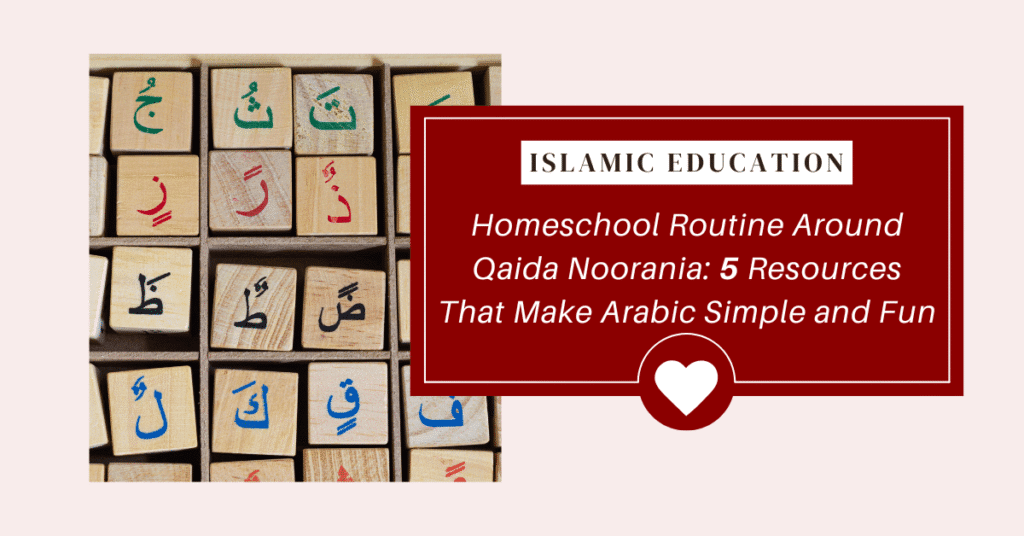
Magnetic Arabic letters turn recognition into a game. Puzzle style alphabet sheets teach how letters appear at the beginning, middle, and end of words. These tactile activities are excellent for kinesthetic learners and for adding variety to your lessons. Grab Magnetic Arabic letter HERE.
A simple weekly plan to use these resources
- Daily (5–10 minutes): Six Cards review with timer for quick sound and haraka practice.
- 3 times/week (10–15 minutes): Qaida Noorania book lesson focusing on a new letter or rule.
- 2 times/week (10 minutes): Interactive workbook pages from Reading Quran or Teach in 10 Easy Lessons.
- Weekly activity: Magnetic letter games or puzzle sheets to reinforce shapes and positions.
- Flexible day: Use a photocopied activity when motivation is low to keep momentum.
This practical schedule shows how to create homeschool routine that balances short daily practice with playful reinforcement.
Tips that keep lessons joyful
- Use a timer to keep lessons bite-sized.
- Photocopy workbook pages to reuse with multiple children.
- Rotate activities so lessons feel fresh.
- Remind yourself and your child of the bigger purpose: connection with the Quran and eventually being able to read the Quran.
Teaching Qaida Noorania doesn’t need to be long or stressful. With a clear plan and a handful of reliable resources, you can build a calm, consistent practice. Remember the simple formula I follow: short daily sessions, a focused core book, and playful supplements. This approach demonstrates in real terms how to create homeschool routine that lasts and nurtures love for learning the Quran.
Pingback: Ramadan Prep for Moms: Create a Worship Plan that works -